IeJSME 2018 12(1)
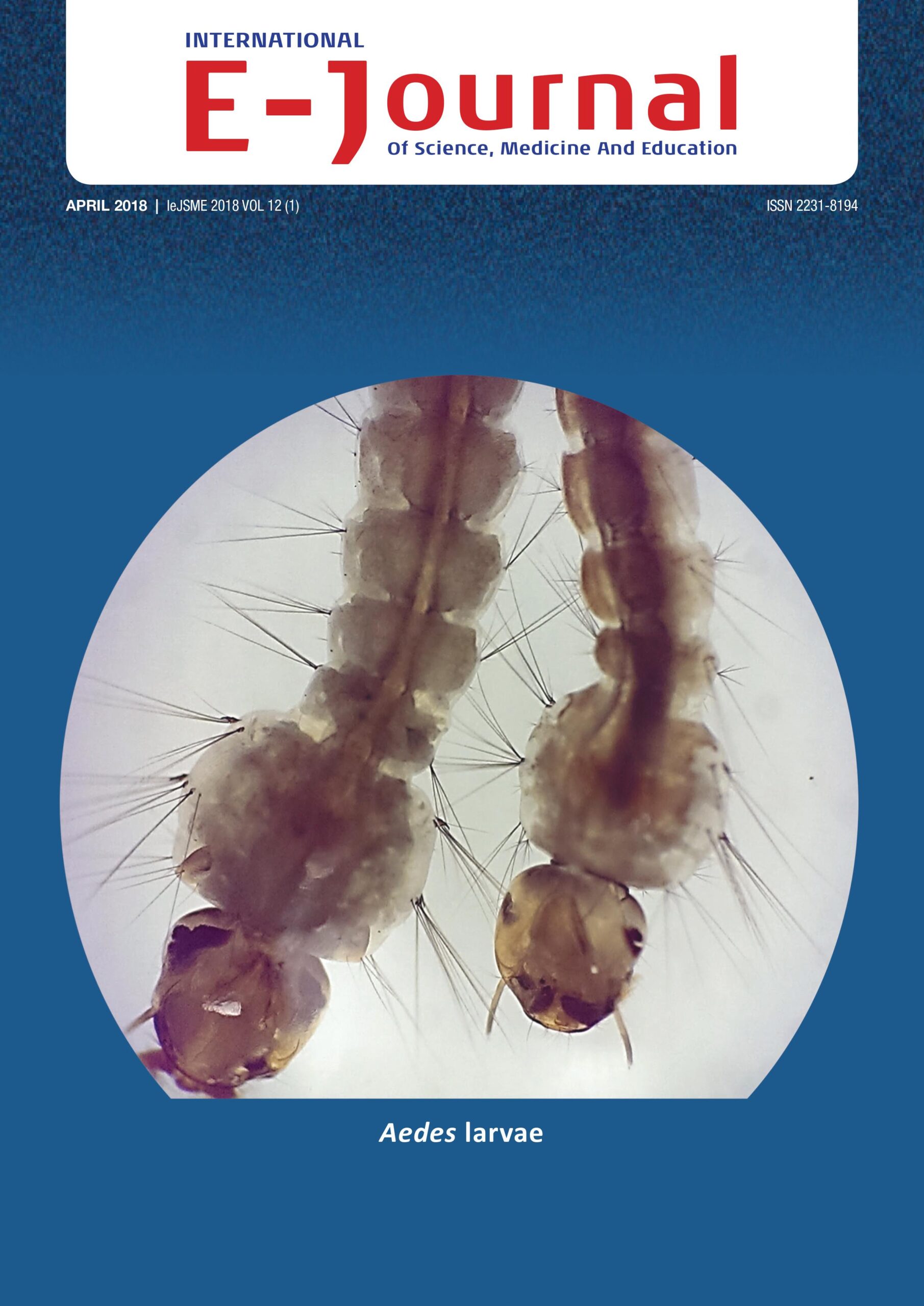
IeJSME 2018 12(1)

International e-Journal of Science, Medicine & Education (IeJSME)
International Medical University Malaysia
IeJSME 2018 12(1)
Author: Lokman Hakim Sulaiman
Citation: IeJSME 2018 12(1): 1-3
Authors: Tze Hao Wong, Esha Das Gupta, Ammu K Radhakrishnan, Suk Chyn Gun, Gandhi Chembalingam, Swan Sim Yeap.
ABSTRACT
Objective: Rheumatoid arthritis (RA) is a chronic inflammatory condition that can be associated with abnormal bone turnover and hence osteoporosis. Osteocalcin (OC) levels are increased in conditions with high bone turnover, including high RA disease activity. Thus, OC levels could possibly be used as a marker to assess bone health and disease activity in RA patients. As there have been no previous studies looking at serum OC levels in Malaysian RA patients, this study was performed to examine possible correlations between OC, bone mineral density (BMD) and disease activity in this population.
Methods: A cross-sectional study of 75 female RA patients and 29 healthy controls was performed. Serum OC was measured using a Quantikine® ELISA kit. Dualenergy x-ray absorptiometry (DXA) was used to assess BMD.
Results: Serum OC levels were not significantly different between RA patients (median 14.44 ng/mL, interquartile range [IQR 12.99]) compared to healthy controls (median 11.04 ng/mL IQR 12.29) (p=0.198). Serum OC increased with age (Spearman’s rho r=0.230, p=0.047). There was no significant correlation between serum OC and body mass index (BMI), menopause status, BMD, DAS28, swollen or tender joint counts. Overall, there were 11 (14.7%) patients with osteoporosis and 27 (36.0%) with osteopenia. Menopause status was significantly associated with BMD at all sites (lumbar spine p=0.002, femoral neck p=0.004, total hip p=0.002).
Conclusions: Serum OC were similar in RA patients compared to healthy controls. In RA patients, serum OC did not correlate with RA disease activity or BMD. Menopause status remains an important influence on BMD. Thus, measuring serum OC levels in Malaysian RA patients was not useful in identifying those at risk of low BMD.
Keywords: osteocalcin, bone mineral density, DAS28, rheumatoid arthritis, Malaysia.
Citation: IeJSME 2018 12(1): 4-10
Authors: Htar Htar Aung, Nilar Shwe, Tin Tin Myint, Tin Moe Nwe.
ABSTRACT
Introduction: It is still a challenge that the dissecting room has a place in learning gross anatomy. Understanding the students’ preference of learning tools is important to devise alternative teaching aids for improvement in learning anatomy. This study was conducted to assess student’s preference of learning tools available in the anatomy laboratory of an integrated curriculum.
Methods: A cross-sectional comparative study was carried out for 4 weeks among 741 medical and dental students of International Islamic University Malaysia (IIUM), Universiti Teknologi MARA (UiTM), University Sabah Malaysia (UMS) and University Malaysia Sarawak (UNIMAS). Pre-tested, semi-structured, self-administrated questionnaires including open-ended questions were distributed. The data were analyzed by using SPSS 17.
Results: Most of the participants were Malays (86%) and female (67%). The students from IIUM, UiTM, UMS and UNIMAS preferred the plastic model in terms of handability and application in examination (OSPE). It was statistically significant (p<0.05). In terms of understanding and information, the students of IIUM, UiTM and UMS
preferred the plastic model while UNIMAS students preferred the prosected wet specimen over the plastic models. In terms of overall preference, students of IIUM and UiTM preferred the plastic model (85.8% and 44.1% respectively). In UNIMAS, their preference for the prosected wet specimen (90.7%) was slightly higher than for the plastic model (87.8%). UMS students preferred both cadaver (51.9%) and plastic model (50%).
Conclusion: Most of the students preferred the plastic model as the best learning tool in studying gross anatomy. This study suggests that plastic model may hold a role in enhancing students’ learning of gross anatomy in an integrated curriculum.
Keywords: Cadaver; learning tool; plastic model; prosected wet specimen; students’ preference.
Citation: IeJSME 2018 12(1): 11-17
Authors: Win Lin Chai, Yuen Hoong Phang, Hwee Cheng Chong.
ABSTRACT
Tumoral calcinosis is an uncommon condition which has been described to exist in primary and secondary forms. A lack of awareness of this entity can lead to unnecessary procedures and incorrect management. We report a case of a patient on peritoneal dialysis who presented with multiple painful joint swellings to the orthopaedic department. An initial diagnosis of septic arthritis was made, then revised to chronic tophaceous gout and referred to the rheumatology unit.
Keywords: Dialysis, gout, orthopaedics, rheumatology, tumoral calcinosis, joint.
Citation: IeJSME 2018 12(1): 18-20
Authors: Ren Yi Kow, Hazwan Ab Wahid, Ruben Jaya Kumar, Ed Simor Khan Mor Japar Khan, Colin Komahen, Chooi Leng Low.
ABSTRACT
Cervical spine injury is commonly associated with road-traffic accidents. The true incidence of cervical spine injuries is unknown due to under-reporting of such injuries. Cervical spine injury is associated with high morbidity and mortality if it is missed. With the advancement of imaging modalities, the number of missed cervical injuries has reduced. Nevertheless, some clinicians are dependent solely on imaging tools to rule out cervical spine injury in a trauma victim. We report two cases of “near miss” C6 fracture to highlight the importance of a detailed clinical history and clinical examination with imaging as an adjunct to rule out cervical injury.
Keywords: cervical fracture; trauma; spine; radiology; computed tomography; magnetic resonance imaging.
Citation: IeJSME 2018 12(1): 21-26
Author: Mansharan Kaur Chaincel Singh
ABSTRACT
Amoebiasis is a parasitic infection caused by the intestinal protozoan Entamoeba histolytica, most prevalent in developing countries. It results in 40,000 to 100,000 deaths each year from amoebic colitis and extra intestinal infections. Amoebic liver abscess (ALA) is the most common extra intestinal site of infection with an incidence of between 3% and 9% of all cases of amoebiasis. Ultrasound which has a sensitivity of more than 90% for detecting ALA is highly recommended as an initial investigation followed by serological demonstration of circulating antibodies specific to Entamoeba histolytica.
Keywords: amoebiasis; amoebic liver abscess; Entamoeba histolytica; serology; ultrasound.
Citation: IeJSME 2018 12(1): 27-31